Vol. 12 No. 1 (2026): Jurnal Borneo-Kalimantan
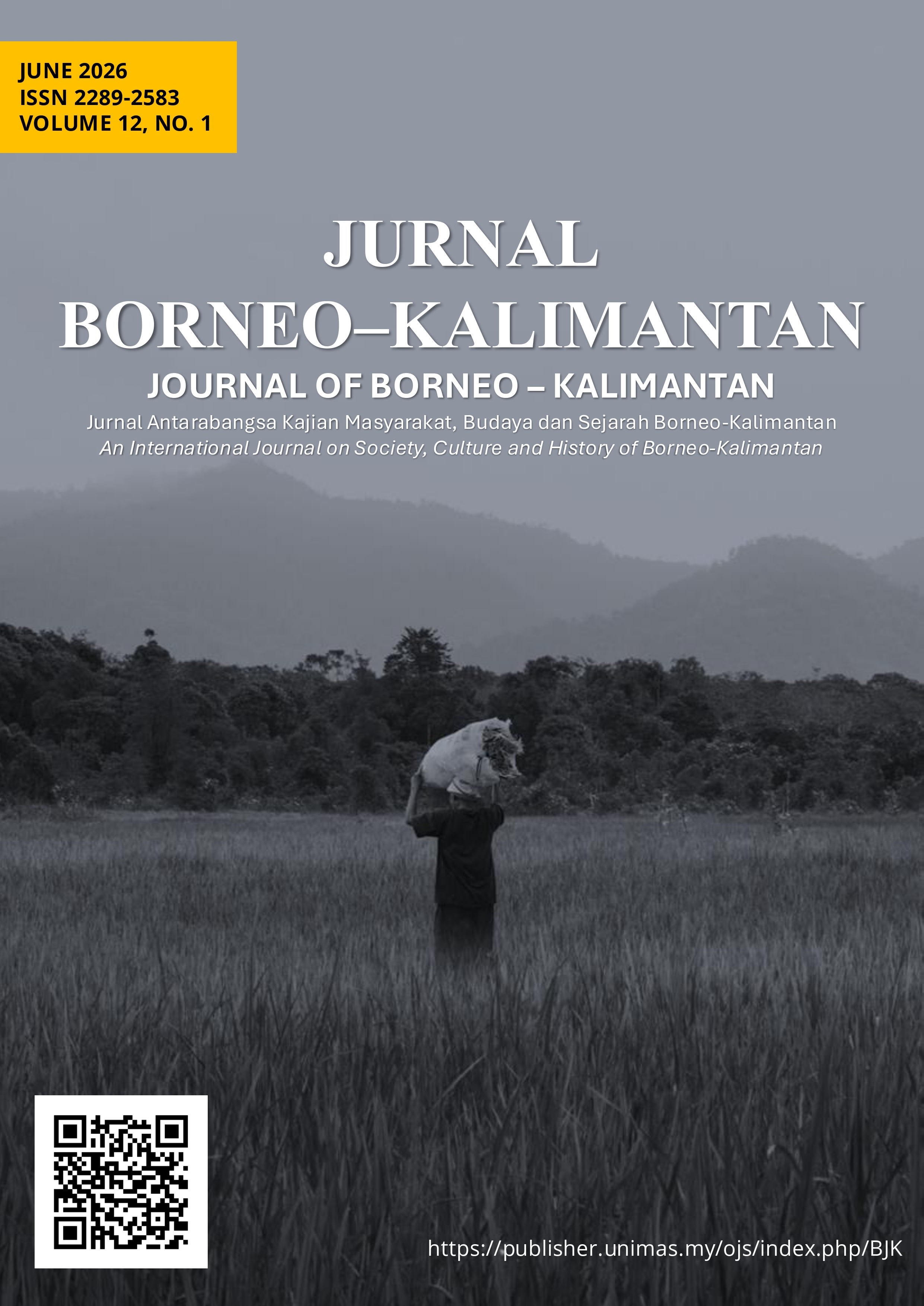
Welcome to Journal of Borneo-Kalimantan, Vol. 1, 2026.
Our first issue of the year featured eight full length articles, two research notes and a book review. The works expressed the Borneo experience of issues that have global significance.
The assertion of culture and values in contemporary Borneo continues to be a topic of interest among researchers in the social science who seek to understand the adaptation of culture in the face of change and transformation. From Muhammad Kurniawan, we learnt the integration of cultural context in the teaching of Bahasa Indonesia for Foreign Speakers in West Kalimantan is an explicit method in the inculcation of the Indonesian value-system among the foreign learners. Another article from West Kalimantan by Muhammad Syaifulloh described the ways in which the Dayak Bemoyo customs adapted to the changes in the community life as they transitioned from the traditional living space to a modern, administrative set-up. Instead of the purging of tradition, it has been a creative adaptation which both maintained and altered the customary practice. Another cultural invention that has stood the test of time is entelah, an Iban riddle that articulates the verbal arts of hints and imagery. The authors Feona Albert et al. examined the linguistic composition of the 338 riddles found in the collection of the Tun Jugah Foundation. Culture is also a major focus in the latest edition of Svara magazine, which features a line-up of writings on Borneo. The reviewer drew attention to the notion of culture in the collection and questioned its influence in the framing of issues in Borneo.
The state’s pursuit of economic and societal transformation through the deployment of digital technology is the latest in the long march of global development agenda. In Sarawak, the government presents digital technology as one of the strategic thrusts and enabler in the Development Strategy 2030 with the ambitions to grow the state’s economy to 8% annually and to raise household income to RM15,047. Three of the articles highlight the current progress of the digital-powered development. Ani Hafiffy discovered that the adoption of digital technology in rural tourism in Lundu was met with positive response by the local operators who looked up for the new opportunity to better their socio-economic circumstances. Zahidin Abdul Rahman et al. assessed the component of cybersecurity in the state’s digital infrastructure, while Abdul Basit Hussain et al. argued that the slow rate in the technological development of the human capital is a challenge in realising the 2030 target.
Social change is not only a macro, abstract process but is also felt at the personal level. The acceleration of urbanization has, among other factors, led to increased risks to life in urban areas. Similarly, changes occurring in rural settings have also impacted individual lives. An article by Juna Liau revealed the changes experienced by the survivors of the road traffic injuries which included social, emotional and economic. In another article, Wong Yun Teng has used personal stories to reconstruct the changes brought by the migration of the Chinese to the southwestern Sarawak and their interpersonal connections with the rural community.
We hope you find the articles informative and interesting. Do write and let us know your thought about the writings in the volume.
Chief Editor
Published:
2026-06-29